ZMorph VX Reviews: See Why 0 Shoppers Rated It 0 Stars!
Everyone’s got opinions. We collected 0 of them to see if the ZMorph VX 3d printer really earns that 0/5 rating.
 Supermod
 Moderator
 Recaptor
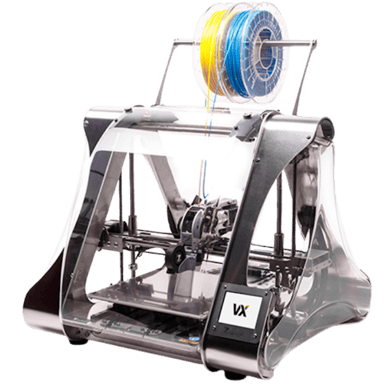
ZMorph VX 3D Printer: A Multifunctional Powerhouse Designed for Professionals
The ZMorph VX stands as a distinctive figure in the realm of FDM/FFF 3D printers, tailored explicitly for advanced professionals and educational institutions that require versatility and precision. Released in 2017 and manufactured in Poland, this robust machine is crafted for serious applications ranging from prototyping to industrial usage. On paper, the device's measurable features, such as its dual extruders, a substantial build volume, and a closed-frame design, collectively highlight a printer engineered for both performance and reliability. But does it translate into real-world effectiveness? Let's dive into the specifications and performance to assess its true value.
Detailed Specs & Features
The ZMorph VX operates on an internal power supply compatible with a voltage range of 100 to 240 volts, offering flexibility across various regions. It consumes 360 watts during operation and drops to 10 watts while idling, indicating moderate energy efficiency for a professional-grade machine without any energy-saving mode. The printer's physical footprint (approximately 18.9" wide, 20.5" deep, and 22.8" tall) and weight (around 62.8 lbs) make it sufficiently compact for workshop environments yet stable for reliable operation.
Its build dimensions of 9.84" by 9.25" by 6.5" translate to a build volume of 593 cubic inches, enough space for most prototype-scale projects. A key strength lies in its dual-extruder system, which supports various nozzle sizes from 0.2 mm to 0.8 mm and features quick-swap nozzle capability. This design simplifies switching between tasks while delivering fine detail with minimum layer resolution as low as 25 microns.
Moreover, the maximum extruder temperature reaches 482 °F, enabling the printing of engineering-grade materials like Nylon, Carbon Fiber composites, and PC. The heated bed maxes out at 212 °F, supporting excellent adhesion, especially with glass print surfaces; a clear advantage for materials prone to warping.
In terms of materials, the machine accepts a diverse range of filament types, including PLA, ABS, PETG, TPU, and even composite filaments, though it only supports single-material printing at a time. This limitation is somewhat offset by its flexibility to handle third-party filaments, a plus for users who prefer sourcing specialty materials beyond proprietary brands. Yet, it does not support resin workflows or have any resin-related features.
User Experience & Performance (Based on Specs)
Design & Build
The ZMorph VX's sturdy Cartesian frame, paired with a closed enclosure, offers enhanced environmental control, reducing external airflow and temperature fluctuations that could detract from print quality. The integrated lighting inside the chamber, which features white illumination, helps users monitor print progress clearly without opening the enclosure. At 62.8 lbs, the factory-prebuilt unit promises rigidity and stability during the intensive processes, essential for achieving high-quality results.
Performance
On the print quality front, the firm offers a commendable print quality rating of 8 out of 10, grounded in its 25-micron minimum layer height and precise extruder temperature range. The maximum effective print speed of 80 mm/s is balanced, emphasizing accuracy over sheer speed, especially for complex prototyping tasks, as advised by the 90% print success rate metric, which is reassuring for professionals relying on consistent output. The machine excels at handling overhangs up to 60 degrees and bridges moderately well, although its bridging score of 10 suggests some care is needed for parts requiring extended horizontal spans.
Camera / Display / Audio Quality
While the ZMorph VX is not outfitted with a built-in camera for live print monitoring, it compensates with a user-friendly 7-inch touchscreen featuring a resolution of 1024x600 pixels, enabling precise control and simplified navigation. The interface complements its advanced proprietary software environment. Noise levels operate at a moderate 50 dB under print load, dipping to 35 dB when idle, which will be tolerable in workshops but potentially noticeable in quiet office spaces.
Extra Features
Among notable professional features is the presence of safety certifications, including CE, FCC, and RoHS compliance, and safety mechanisms such as an emergency stop button, automatic shutdown on error, and overheat protection; this is important for extended unattended printing sessions or educational environments. However, the printer does lack advanced features like filament runout sensors or vibration compensation, which could impact seamless extended use.
Pros & Cons
Pros
- Highly versatile filament compatibility with support for advanced materials
- Dual-extruder with quick-swap nozzles and extensive temperature range
- Sturdy closed Cartesian frame with built-in chamber lighting and tactile touchscreen
Cons
- Limited to single-material printing despite dual extruders
- No filament runout detection or energy-saving mode included
- Relatively high price point with moderate warranty duration
Price & Value for Money
Listed at $4399 at MatterHackers, the ZMorph VX positions itself firmly in the professional segment. Given its rich one-year warranty and the flexibility offered by a broad operating temperature and multi-nozzle setup, the pricing feels quite justified for users demanding reliability and advanced material compatibility. While it might seem steep for hobbyists, the value proposition aligns with industrial-grade features and upgrade paths into laser and CNC modules, effectively broadening its function beyond just 3D printing.
Quick Take
In short, ZMorph VX offers a balanced blend of precision, material diversity, and durable hardware. Its strength lies in the robust build and dual-extruder versatility, though some modern conveniences like filament sensors are missing. If we look at the numbers alone, it's a solid investment for advanced professional use.
Closing Recommendation
The ZMorph VX may be ideal for professionals and educational users who need a reliable workhorse capable of tackling diverse projects with demanding materials. It appears to perform best where precision and material flexibility are paramount, while users prioritizing multi-material printing or energy efficiency might look elsewhere. Overall, it helps users achieve quality prototyping backed by solid engineering and certified safety features.
Verdict
Rating: Based on the specifications and overall feature set, we believe ZMorph VX deserves 4.4 out of 5.
- Winner Feature => Exceptional versatility with dual extruders and high-temperature capability enabling advanced materials.
- Needs Improvement => Lack of filament runout sensor and multi-material print support limits convenience and functionality.
Reviews 0
The good, the bad, and the brutally honest.Average Rating

More 3D Printers 453
Unlock more awesome finds.